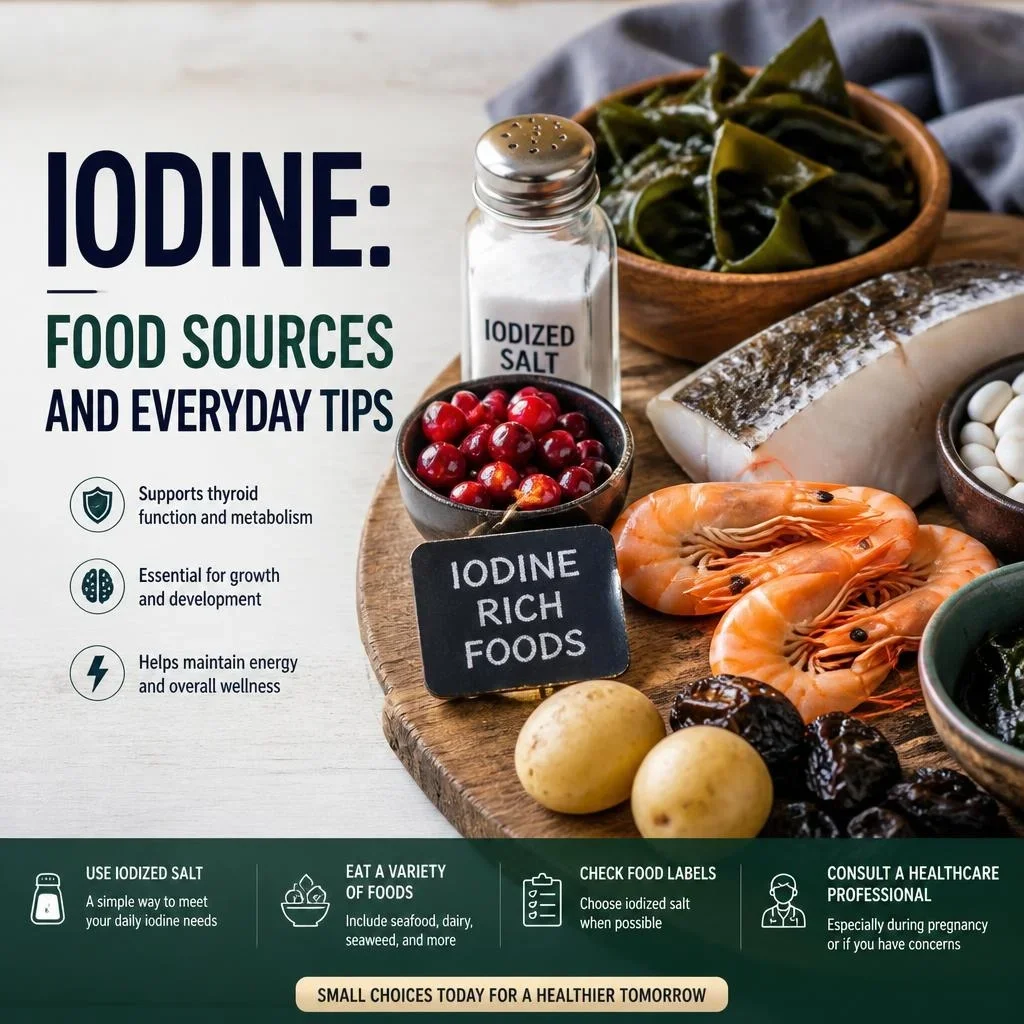
Iodine: Food Sources and Everyday Tips
A friendly, plain-English guide. Iodine is needed to make thyroid hormones, which help control metabolism and growth. Practical tips, safety notes and FAQs — educational only.
In This Article
Why this matters
Health advice can feel overwhelming, so this guide keeps things simple. Here is what you need to know about iodine, explained in plain, friendly language.
The short version: Iodine is needed to make thyroid hormones, which help control metabolism and growth. In this article we cover the basics, practical tips, common pitfalls and when it is wise to speak to a health professional. Remember that this is general education, not personal medical advice.
Quick answer
- What it is: Iodine is needed to make thyroid hormones, which help control metabolism and growth.
- Easy first step: iodised salt in small amounts, dairy, eggs and seafood.
- Keep in mind: Do not take iodine or kelp supplements without advice, as too much can upset thyroid function.
- Bottom line: steady, realistic habits beat quick fixes.
Where to find iodine
Good food sources include iodised salt in small amounts, dairy, eggs and seafood. Plant-based eaters can combine legumes, whole grains, nuts, seeds and fortified foods, while those who eat animal foods can also include eggs, dairy and fish.
- Aim for variety rather than relying on one source.
- Seasonal, local produce is often fresher and more affordable.
- Cooking methods matter: very long cooking or deep-frying can reduce some nutrients.
Building a balanced plate
The plate method makes it easy: half vegetables and fruit, a quarter protein, a quarter whole grains. This naturally covers many nutrients, including iodine.
A note on supplements: many people start taking pills without testing. Do not take iodine or kelp supplements without advice, as too much can upset thyroid function.
Safety notes and when to see a doctor
Do not take iodine or kelp supplements without advice, as too much can upset thyroid function. Also, if you have persistent pain, a high fever, breathing difficulty, fainting or any new and worrying symptom, do not rely on home tips; see a doctor promptly.
- Children, older adults and pregnant women should take extra care with changes.
- Never stop or change a prescribed medicine on your own.
- Online information is not a substitute for professional advice.
The takeaway
Iodine is not magic, but it can be a meaningful part of everyday health. Start small, be consistent and listen to your body. Good sleep, balanced meals, water and movement work together to make the real difference.
If you found this guide helpful, share it with someone who might benefit, and talk to your doctor before making major health decisions.
Frequently Asked Questions
Is it okay to focus on iodine every day?
How long before I notice a difference with iodine?
Are there any risks with iodine?
Sources & Further Reading
This article references general guidance from reputable public health organisations:
-
WHO / NIH MedlinePlus / CDC (general public guidance)
Referenced for: General lifestyle guidance