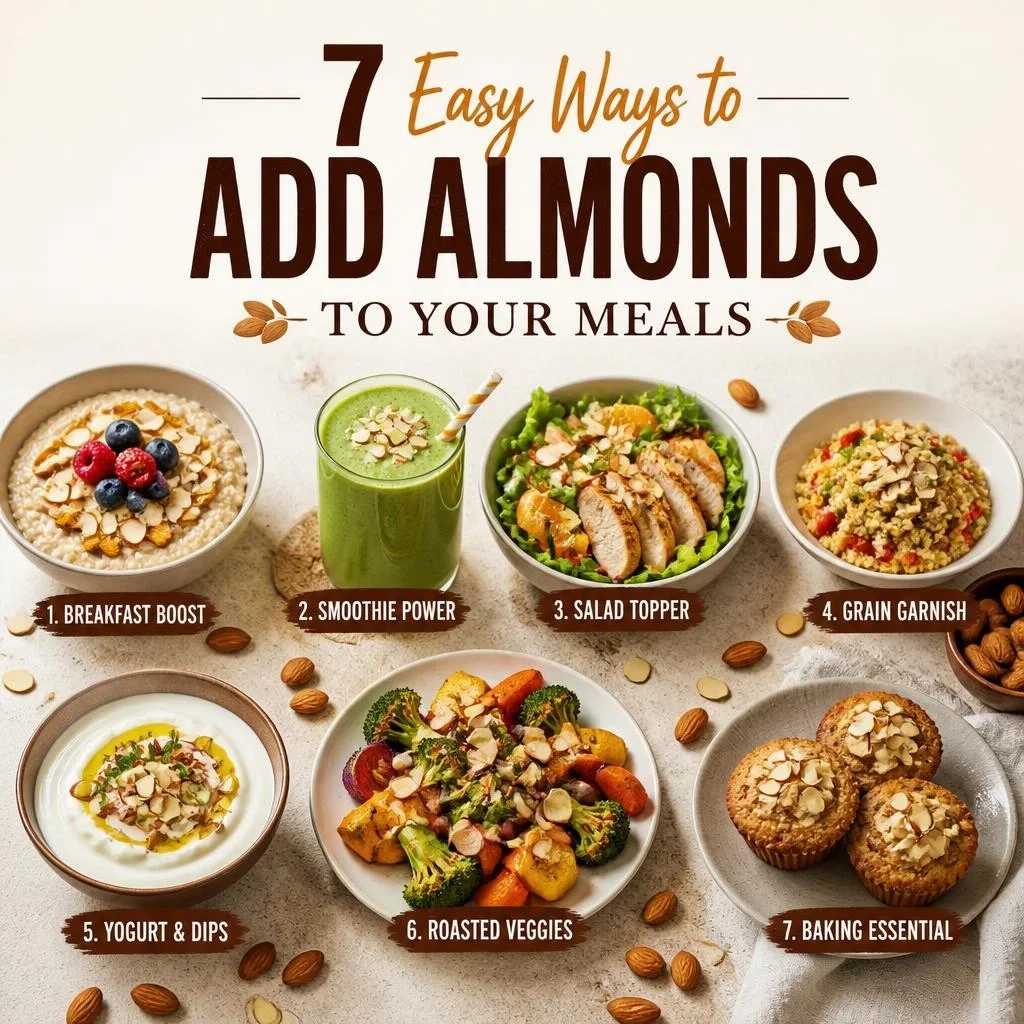
7 Easy Ways to Add Almonds to Your Meals
A friendly, plain-English guide. Almonds provide healthy fats, protein, fibre, vitamin E and magnesium. Practical tips, safety notes and FAQs — educational only.
In This Article
Why this matters
Let's take a calm, practical look at almonds: what it is, why it matters and how to fit it into real life without stress.
The short version: Almonds provide healthy fats, protein, fibre, vitamin E and magnesium. In this article we cover the basics, practical tips, common pitfalls and when it is wise to speak to a health professional. Remember that this is general education, not personal medical advice.
Quick answer
- What it is: Almonds provide healthy fats, protein, fibre, vitamin E and magnesium.
- Easy first step: a small handful as a snack, sliced on breakfast, or as almond butter on toast.
- Keep in mind: Nuts are a common allergen, and whole nuts are a choking risk for young children.
- Bottom line: steady, realistic habits beat quick fixes.
Seven simple ideas
- Breakfast: a small handful as a snack, sliced on breakfast, or as almond butter on toast, paired with fruit or a protein food.
- Lunch box: add a portion to grain bowls, wraps or salads.
- Snack time: a lighter, home-made option instead of packaged snacks.
- Dinner: a smaller portion in a warm, comforting dish.
- Weekend: try a new recipe and get the family involved.
- Batch cook: prepare extra and store it safely for busy days.
- Mix and match: combine with herbs, spices and vegetables for variety.
Keeping portions balanced
Use the plate method: fill half your plate with vegetables, a quarter with protein and a quarter with whole grains or starchy foods. Almonds can slot into this pattern easily. However healthy a food is, it cannot replace an overall varied diet.
Safety notes and when to see a doctor
Nuts are a common allergen, and whole nuts are a choking risk for young children. Also, if you have persistent pain, a high fever, breathing difficulty, fainting or any new and worrying symptom, do not rely on home tips; see a doctor promptly.
- Children, older adults and pregnant women should take extra care with changes.
- Never stop or change a prescribed medicine on your own.
- Online information is not a substitute for professional advice.
The takeaway
Almonds is not magic, but it can be a meaningful part of everyday health. Start small, be consistent and listen to your body. Good sleep, balanced meals, water and movement work together to make the real difference.
If you found this guide helpful, share it with someone who might benefit, and talk to your doctor before making major health decisions.
Frequently Asked Questions
Is it okay to focus on almonds every day?
How long before I notice a difference with almonds?
Are there any risks with almonds?
Sources & Further Reading
This article references general guidance from reputable public health organisations:
-
WHO / NIH MedlinePlus / CDC (general public guidance)
Referenced for: General lifestyle guidance