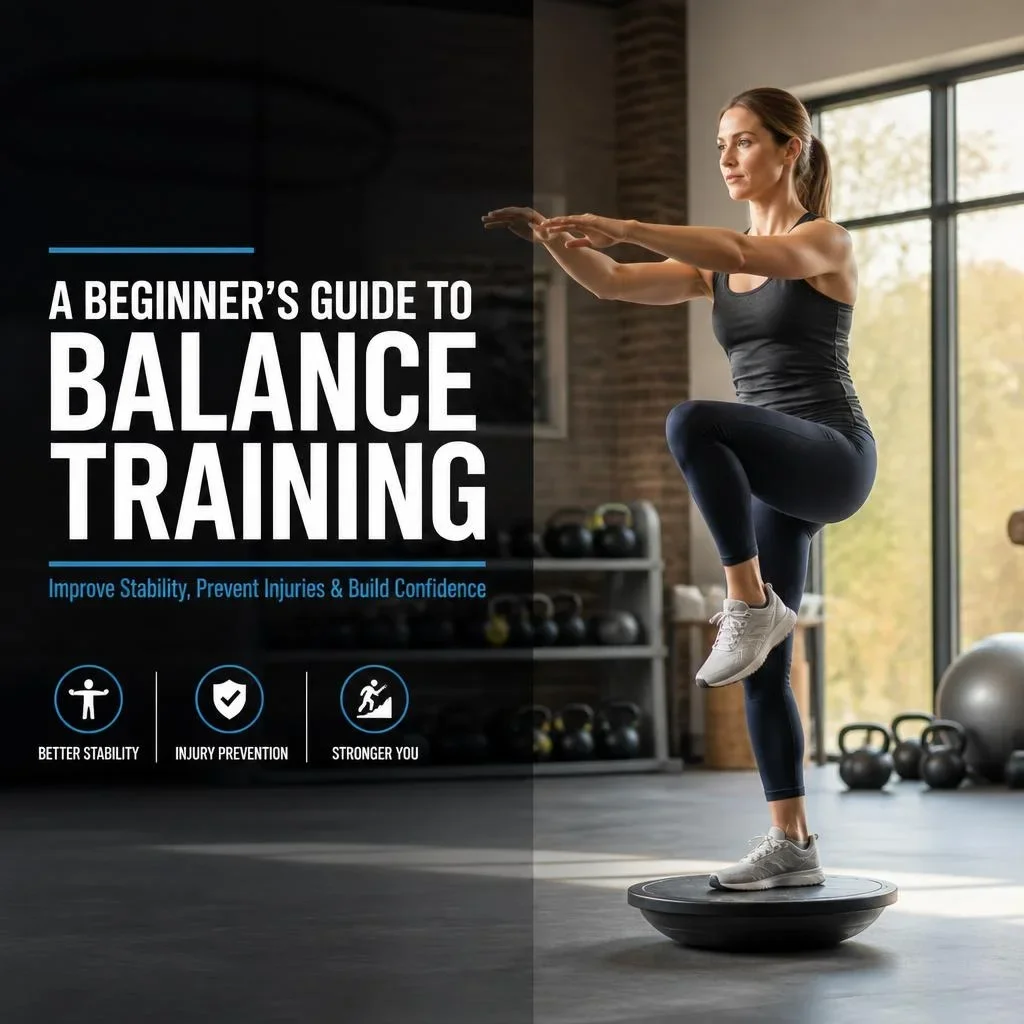
A Beginner's Guide to Balance Training
A friendly, plain-English guide. Balance naturally declines with age, but regular practice can help maintain it. Practical tips, safety notes and FAQs — educational only.
In This Article
Why this matters
Let's take a calm, practical look at balance Training: what it is, why it matters and how to fit it into real life without stress.
The short version: Balance naturally declines with age, but regular practice can help maintain it. In this article we cover the basics, practical tips, common pitfalls and when it is wise to speak to a health professional. Remember that this is general education, not personal medical advice.
Quick answer
- What it is: Balance naturally declines with age, but regular practice can help maintain it.
- Easy first step: standing on one foot near a counter, heel-to-toe walking and tai chi.
- Keep in mind: Practise near a stable support to reduce fall risk.
- Bottom line: steady, realistic habits beat quick fixes.
Getting started, step by step
- Start small: standing on one foot near a counter, heel-to-toe walking and tai chi. In the first week, that alone is enough.
- Pick a fixed time or cue, like after breakfast or when you shut your laptop, so the habit has a home.
- Increase just one thing each week: time, frequency or variety, never all at once.
- Listen to your body. Stop if something hurts or feels wrong.
- Review at the end of each week: what worked, what did not, and what to adjust.
The goal is not perfection. It is building something you can keep doing for months. If you miss a day, simply pick it up again the next day; there is no need for guilt.
How it may help
People who build this into their routine often describe feeling more energetic, comfortable or in control. Results vary from person to person, and this is not a treatment for any illness. Think of balance Training as one piece of a healthy lifestyle, alongside balanced meals, regular movement, good sleep and social connection.
There is also a quieter benefit: awareness. When you pay attention to one habit daily, you start noticing other small things about how your body and mind feel.
Safety notes and when to see a doctor
Practise near a stable support to reduce fall risk. Also, if you have persistent pain, a high fever, breathing difficulty, fainting or any new and worrying symptom, do not rely on home tips; see a doctor promptly.
- Children, older adults and pregnant women should take extra care with changes.
- Never stop or change a prescribed medicine on your own.
- Online information is not a substitute for professional advice.
The takeaway
Balance Training is not magic, but it can be a meaningful part of everyday health. Start small, be consistent and listen to your body. Good sleep, balanced meals, water and movement work together to make the real difference.
If you found this guide helpful, share it with someone who might benefit, and talk to your doctor before making major health decisions.
Frequently Asked Questions
Where can I find reliable information?
Can this article replace advice from my doctor?
Is it okay to focus on balance Training every day?
How long before I notice a difference with balance Training?
Sources & Further Reading
This article references general guidance from reputable public health organisations:
-
WHO / NIH MedlinePlus / CDC (general public guidance)
Referenced for: General lifestyle guidance