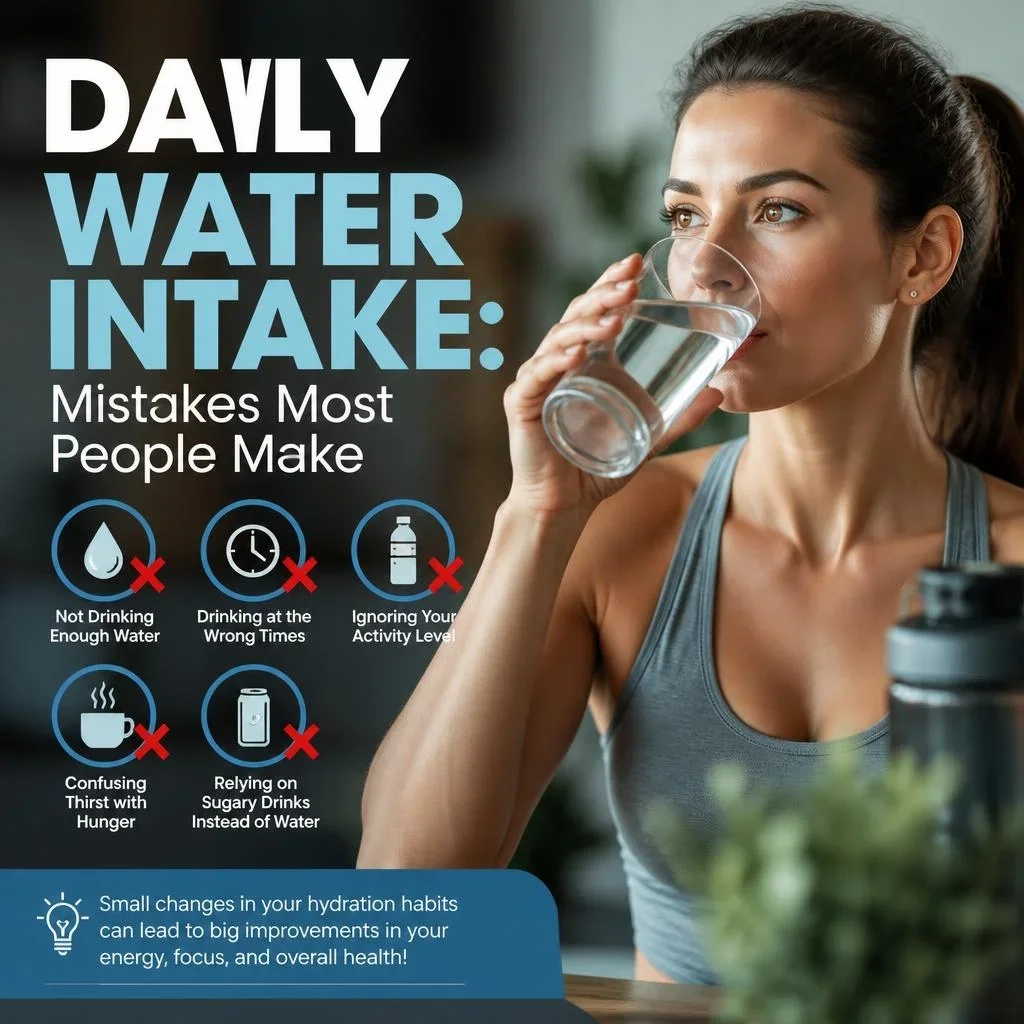
Daily Water Intake: Mistakes Most People Make
A friendly, plain-English guide. Water needs vary with body size, activity and climate, and thirst is a useful guide for most healthy people. Practical tips, safety notes and FAQs — educational only.
In This Article
Why this matters
If you have ever wondered about daily Water Intake, you are not alone. It comes up in conversations with friends, in news headlines and all over social media, often with mixed messages.
The short version: Water needs vary with body size, activity and climate, and thirst is a useful guide for most healthy people. In this article we cover the basics, practical tips, common pitfalls and when it is wise to speak to a health professional. Remember that this is general education, not personal medical advice.
Quick answer
- What it is: Water needs vary with body size, activity and climate, and thirst is a useful guide for most healthy people.
- Easy first step: keeping a water bottle nearby, drinking with meals and checking that urine is pale yellow.
- Keep in mind: People with heart or kidney conditions may have fluid limits set by their doctor.
- Bottom line: steady, realistic habits beat quick fixes.
Mistakes to watch for
- Mistake: Trying to change everything at once. Instead: Big overhauls are hard to sustain. Pick one small change and build from there.
- Mistake: Copying someone else's routine exactly. Instead: Your body, schedule and preferences are unique. Adapt ideas to fit your life.
- Mistake: Ignoring warning signs. Instead: Pain or unusual symptoms are signals to pause. People with heart or kidney conditions may have fluid limits set by their doctor.
- Mistake: Relying on willpower alone. Instead: Set up your environment so the healthy choice is the easy choice.
- Mistake: Quitting after a slip. Instead: Everyone has off days. Restart without guilt.
- Mistake: Skipping the basics. Instead: Sleep, water, movement and balanced meals support every other habit.
A better approach
For most people, the most practical approach is keeping a water bottle nearby, drinking with meals and checking that urine is pale yellow. Start gently, give your body time to adjust and stop if anything feels wrong.
A useful rule of thumb: if you could comfortably keep doing it for six months, it is probably the right level for you. Rules that are too strict tend to break.
Safety notes and when to see a doctor
People with heart or kidney conditions may have fluid limits set by their doctor. Also, if you have persistent pain, a high fever, breathing difficulty, fainting or any new and worrying symptom, do not rely on home tips; see a doctor promptly.
- Children, older adults and pregnant women should take extra care with changes.
- Never stop or change a prescribed medicine on your own.
- Online information is not a substitute for professional advice.
The takeaway
Daily Water Intake is not magic, but it can be a meaningful part of everyday health. Start small, be consistent and listen to your body. Good sleep, balanced meals, water and movement work together to make the real difference.
If you found this guide helpful, share it with someone who might benefit, and talk to your doctor before making major health decisions.
Frequently Asked Questions
Can this article replace advice from my doctor?
Is it okay to focus on daily Water Intake every day?
How long before I notice a difference with daily Water Intake?
Are there any risks with daily Water Intake?
Is this suitable for children and older adults?
Sources & Further Reading
This article references general guidance from reputable public health organisations:
-
WHO / NIH MedlinePlus / CDC (general public guidance)
Referenced for: General lifestyle guidance