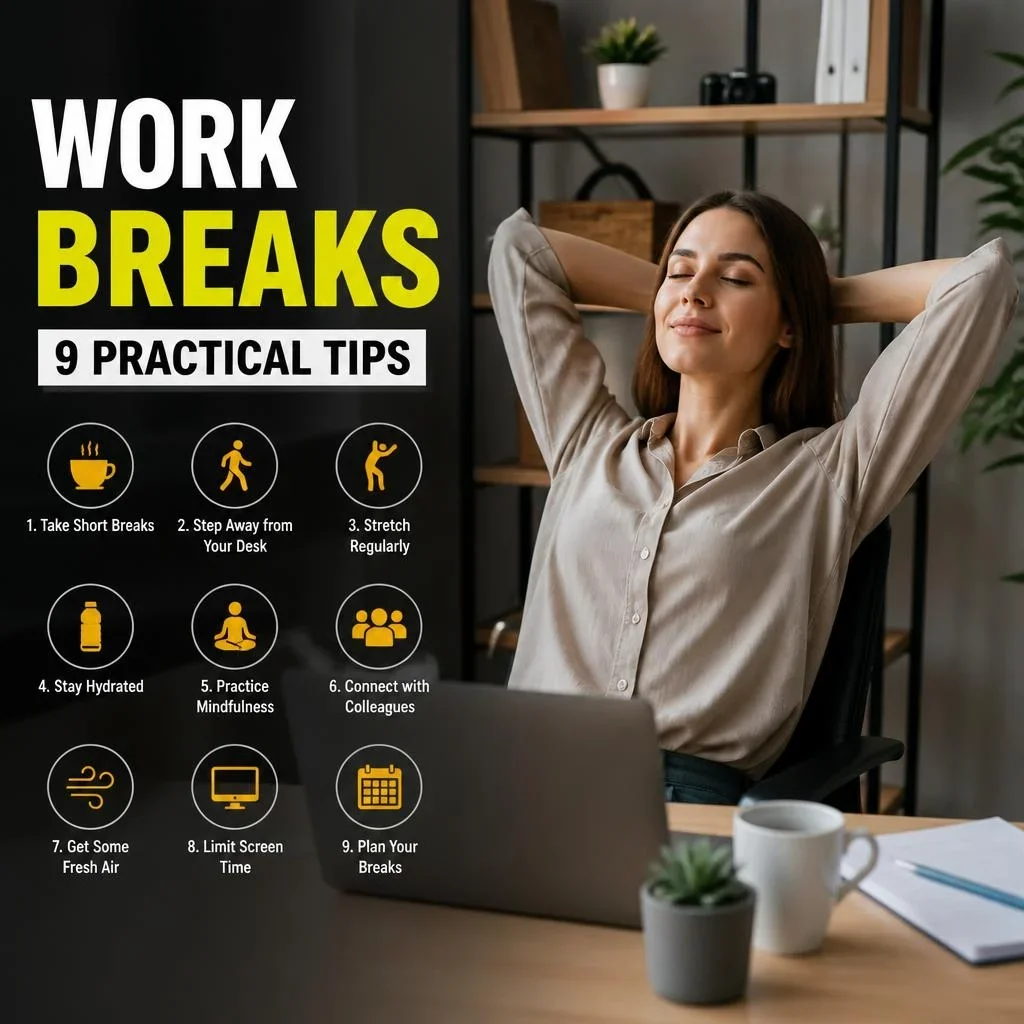
Work Breaks: 9 Practical Tips
A friendly, plain-English guide. Short breaks help restore focus and give your body a chance to move. Practical tips, safety notes and FAQs — educational only.
In This Article
Why this matters
There is a lot of noise online about work Breaks. This guide cuts through it with clear, balanced information you can actually use.
The short version: Short breaks help restore focus and give your body a chance to move. In this article we cover the basics, practical tips, common pitfalls and when it is wise to speak to a health professional. Remember that this is general education, not personal medical advice.
Quick answer
- What it is: Short breaks help restore focus and give your body a chance to move.
- Easy first step: a five-minute break every hour to stand, stretch, refill water or step outside.
- Keep in mind: Breaks are not a waste of time; they often improve productivity.
- Bottom line: steady, realistic habits beat quick fixes.
Practical tips
- Start with one small daily action: a five-minute break every hour to stand, stretch, refill water or step outside.
- Attach it to something you already do, like brushing your teeth or making tea.
- Set a phone reminder for the first two or three weeks.
- Tell a friend or family member; doing it together helps habits stick.
- Jot a quick note about how you feel to spot patterns.
- Stay flexible on busy, travel or low-energy days.
- Plan ahead for eating out, late nights and stressful weeks.
- Celebrate small wins rather than waiting for big results.
- Revisit and adjust every month.
Why it matters
Short breaks help restore focus and give your body a chance to move. Paying attention to this every day can support energy, comfort and overall wellbeing over time. It is not a cure or a guarantee; it is one part of a healthy lifestyle.
Safety notes and when to see a doctor
Breaks are not a waste of time; they often improve productivity. Also, if you have persistent pain, a high fever, breathing difficulty, fainting or any new and worrying symptom, do not rely on home tips; see a doctor promptly.
- Children, older adults and pregnant women should take extra care with changes.
- Never stop or change a prescribed medicine on your own.
- Online information is not a substitute for professional advice.
The takeaway
Work Breaks is not magic, but it can be a meaningful part of everyday health. Start small, be consistent and listen to your body. Good sleep, balanced meals, water and movement work together to make the real difference.
If you found this guide helpful, share it with someone who might benefit, and talk to your doctor before making major health decisions.
Frequently Asked Questions
Is this suitable for children and older adults?
Where can I find reliable information?
Can this article replace advice from my doctor?
Sources & Further Reading
This article references general guidance from reputable public health organisations:
-
WHO / NIH MedlinePlus / CDC (general public guidance)
Referenced for: General lifestyle guidance